
Case Study: From Invisible to Cited by AI: Reviving a Neglected Surgical Equipment Store
How expert content and a fix to the site's structure took a supplier to plastic surgery practices from zero search traffic to page-one rankings and AI recommendations
A Medical Device Store That Had Been Left to Drift: This Case Study
This business sold equipment that plastic surgeons and their teams use every day. It had been online since 2021, with around 345 pages, a product catalog, and a growing blog.
The owner had been doing the things you're told to do: adding pages, improving content, paying for SEO. Almost nothing happened. In their words, the site felt stuck.
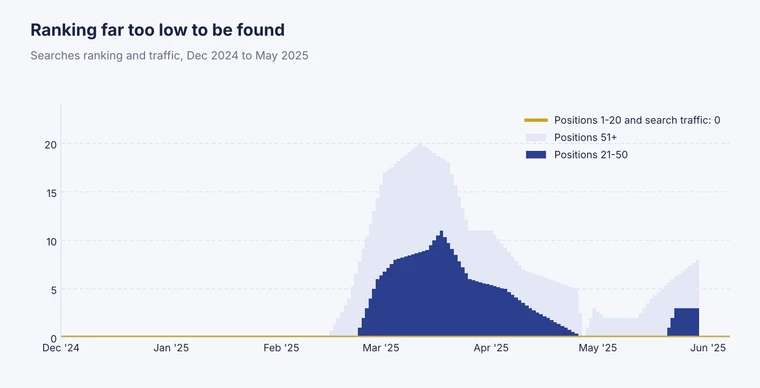
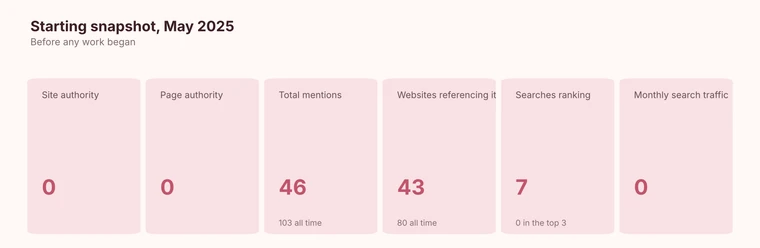
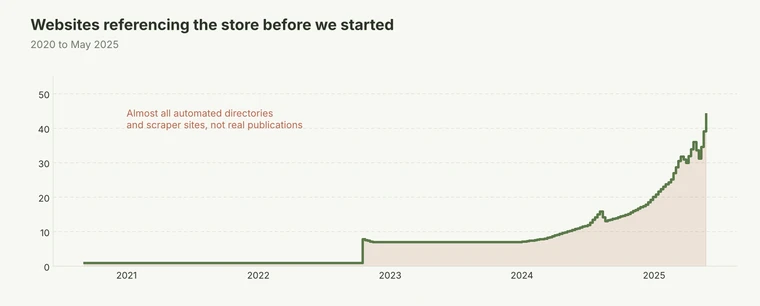
When we looked closer, it was worse than stuck. The site had zero visits from search. It ranked for just 7 keywords. On paper, it had been mentioned by about 43 other websites, but nearly all of those were automated spam directories and scraper sites. Not one was a credible, real publication. Google saw a site that had existed for years without ever earning anyone's trust.
Why Medical Device Websites Need More Than Product Pages
A medical device store can have a large catalog, years of history, and regular content updates yet still fail to attract qualified buyers if its site architecture prevents Google from properly crawling and indexing product pages. This case study shows how ecommerce fulfillment and website structure can determine whether medical equipment is visible to the practices searching for it.
The Problem Nobody Had Spotted in Their Ecommerce Fulfillment
The bigger issue wasn't off the site. It was on it.
Most of the store's product pages, the pages that actually made money, weren't in Google at all. Google had looked at them and chosen not to include them in search results.
The cause was how the site was organized. Product pages weren't connected beneath their category pages; they all sat loose at the same level. So any credibility the site earned flowed to the homepage and category pages but never reached the products themselves. The blog was getting a trickle of visits while the products stayed invisible.
We flagged this on day one. The owner took it seriously and restructured the product pages on their end, while we focused on building the site's credibility.
Why this matters for your practice: the same thing happens to plastic surgery websites all the time. A practice can have beautiful procedure pages for rhinoplasty, breast augmentation, or facelifts that Google simply isn't showing anyone. No amount of marketing fixes a page Google can't see.
Best Practices for Building Credibility in Health Care Search
For medical devices and health care suppliers, search visibility depends on more than keyword targeting. The program focused on real-world examples, authoritative industry mentions, and a steady publishing schedule so Google and AI tools could recognize the store as a credible source rather than another low-trust ecommerce site.
The Approach: Real-World Examples of Earning Trust for Medical Devices
Because the site's existing reputation was essentially worthless, we treated it as a fresh start.
Credibility first. We created expert content for established publications in the medical and equipment space, each referencing the store and pointing readers to it. The early focus was the brand and homepage, so the business as a whole would earn trust before we promoted individual products.
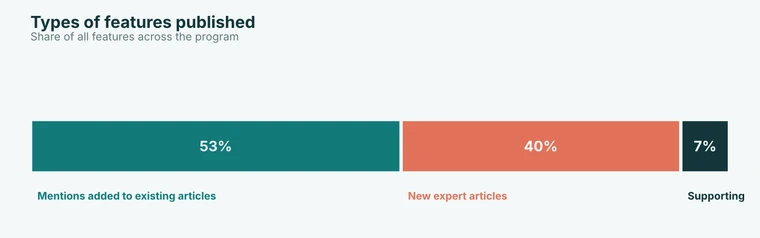
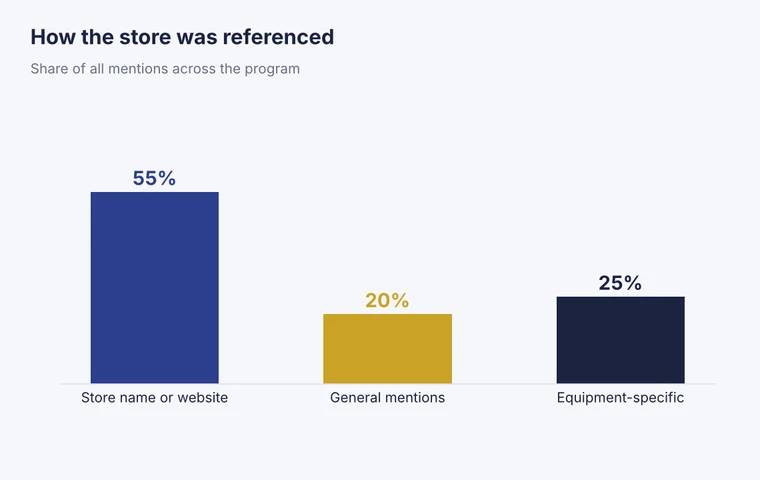
Steady, not sudden. We published consistently every month instead of in bursts. A new site that suddenly appears everywhere looks suspicious to Google, especially in a medical category.
Product and category pages later. Only once the site had real credibility, and the structure fix was in place, did we start directing attention to specific categories and products.
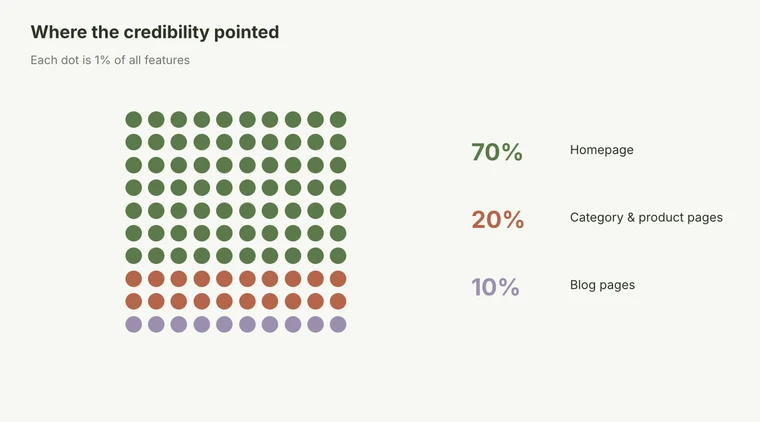
The Hard Part of The Program: Five Quiet Months
For the first five months, almost nothing visible happened. Rankings started appearing in September, but traffic didn't.
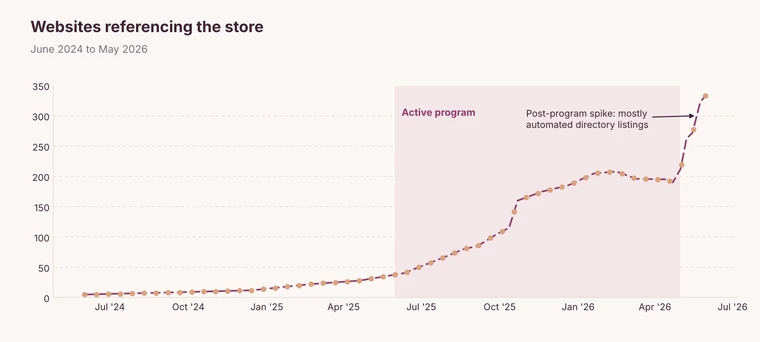
We told the owner exactly that each month. Credibility takes time to register with Google, and on a site that had spent years accumulating nothing but spam, it took longer than usual.
A Google change in September 2025 also limited what outside tools could report beyond the first page of results, which made keyword counts look choppier than they really were.
When the Health Care Site Turned a Corner
The breakthrough came in December. Search traffic showed up for the first time, grew through January and February, then jumped in March and April as product and category pages started holding their positions.
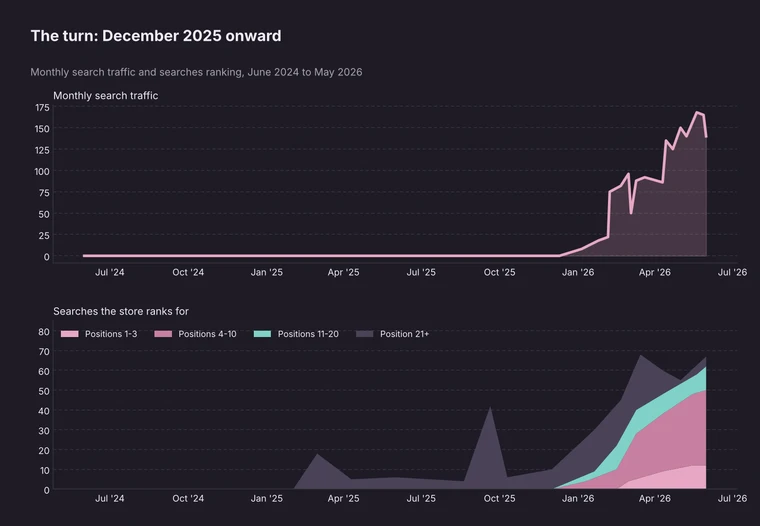
At the same time, something we'd point any business owner to happened: AI tools started recommending the store. Its appearances in ChatGPT and Google's AI results went from essentially nothing to a meaningful and rising count over the final months. When buyers asked AI where to find this kind of equipment, the store was now part of the answer.
The Proof: Results of This Case Study
| May 2025 | Apr 2026 | Late May 2026 | |
|---|---|---|---|
| Monthly search traffic | 0 | 86 | ~134 |
| Keywords ranking | 7 | 54 | |
| Top 3 rankings | 0 | 2 | 9 |
| Site authority score* | 0 | 20 |
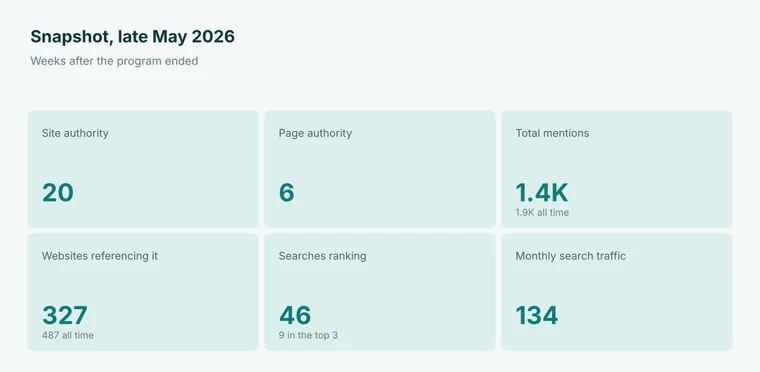
*Domain Rating, a widely used measure of how much trust a website has built.
The late May column matters most. The owner ended the program in April, satisfied they'd hit their goals. Over the following weeks, traffic kept climbing and top 3 rankings more than quadrupled, with no new work from us. That's credibility continuing to pay off after it's been earned.
These are qualified visitors, too. People searching for specialized surgical equipment are buyers, not browsers, and the store was now ranking for the searches where people are ready to order.
Best Practices: What This Means for Your Practice
Being online isn't the same as being visible. This store existed for four years and was effectively invisible the entire time. Plenty of practices are in the same position without knowing it.
Check that Google can actually see your pages. If your procedure pages aren't in Google, nothing else you do will reach patients searching for them.
Real credibility beats a big link count. Dozens of spam mentions did nothing for this store. A steady stream of genuine, expert features did.
AI search follows trust. As the store became more credible, ChatGPT and Google's AI started citing it. Patients are increasingly asking AI which surgeon to see, and the same principle applies.
See Our Work All in One Place
Every Sculpted Search client gets our client dashboard, so you never have to wonder whether things are working during the quiet months. It shows your rankings, website traffic, and how often AI tools like ChatGPT mention your practice, plus technical health reports that catch problems like pages Google isn't showing.
It also includes a built-in reputation management tracker, something no other marketing agency in our field offers, so you can see exactly what patients find when they search your name.
If your site has been online for years but patients still aren't finding you, the problem is usually fixable, and it often starts with something you can't see.
Frequently Asked Questions (FAQ)
How long does it take for a medical device website to see SEO results?
As detailed in this case study, it took about five quiet months before search traffic and meaningful rankings appeared. Credibility takes time to register with Google, especially for health care and medical equipment sites that are held to a higher standard. Once the foundation of trust was built, the growth accelerated steadily.
Why weren't the store's product pages showing up on Google?
The site suffered from a structural issue common in ecommerce fulfillment and medical websites: the product pages were not properly connected beneath their category pages. Because they sat loose at the same level, the credibility the homepage earned never flowed down to the actual products. Once the site architecture was fixed, Google could crawl and index those pages properly.
Can SEO help a medical equipment supplier appear in ChatGPT and AI answers?
Yes. AI search follows trust. As this store earned genuine credibility through real-world examples and authoritative mentions, its appearances in ChatGPT and Google's AI overviews went from zero to a steadily rising count. Building a highly trusted brand signals to AI tools that your business is the right answer to provide to users.
Does the SEO momentum stop when the program ends?
Not immediately. Credibility continues to pay off after it has been earned. In this scenario, the owner concluded the program in April 2026, and over the following weeks, organic traffic continued to climb and their top 3 keyword rankings more than quadrupled without any new ongoing work.
About the author
This case study was written by the Sculpted Search team. Sculpted Search is a digital marketing agency built for aesthetic plastic surgeons, reconstructive surgeons, med spas, and medical suppliers, covering SEO, content, press, ads, websites, and AI search visibility. The agency is led by CEO Artemis Peacocke, who reviews every audit herself, and its team includes an SEO lead, a content lead, an outreach lead, and an outreach specialist. The team works white-hat only, gets surgeon sign-off on anything clinical, and reports in plain English each month. Ask for a marketing audit to see where your practice stands.