
Case Study: Two Years of Steady Growth for a Med Spa and Its Online Cosmetics Store
How 24 uninterrupted months of credibility building nearly quadrupled search traffic and multiplied top Google rankings 5x
A successful business ready for the next level
This med spa wasn't struggling. It had been online for almost ten years, its website had more than 1,400 pages, and it was already drawing about 37,500 visits a month from Google. Alongside its treatments, it sold cosmetic products through an online store, and both sides of the business were growing.
But the cosmetics space is crowded with national brands and major retailers with huge marketing budgets. To compete with them for the searches that drive sales, the med spa needed more credibility than it had.
When we looked closer, we found something holding it back. Nearly half of the websites mentioning it were automated scraper sites that copy images from around the web. They made the site look widely referenced on paper, but Google gives them almost no weight. Underneath all that clutter, the med spa had only about nine genuinely credible publications vouching for it.
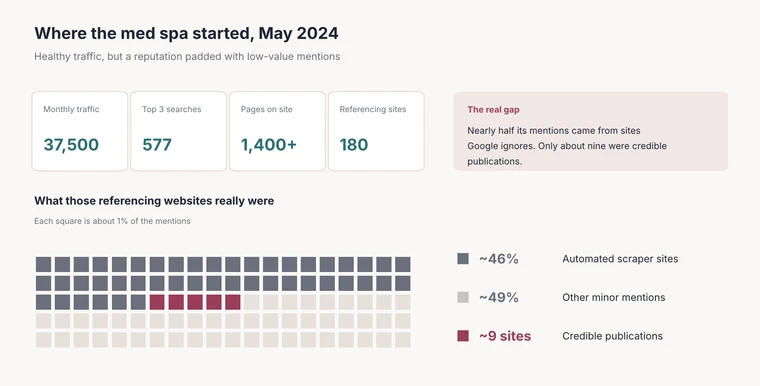
The good news: no penalties, no damage to repair, and traffic already trending up. It didn't need a rescue. It needed real credibility to cut through the noise.
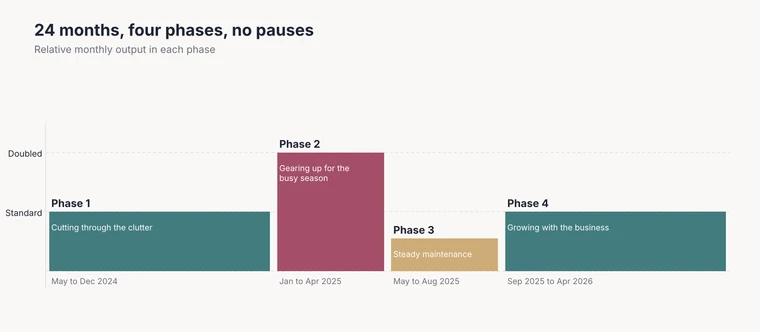
Phase 1: Cutting through the clutter (May to December 2024)
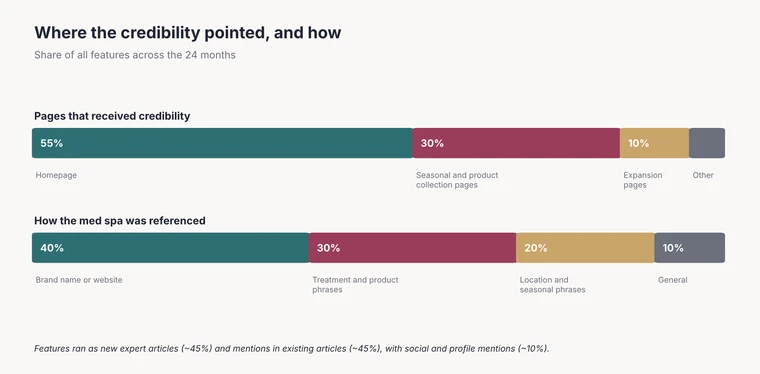
We started by building genuine credibility for the brand through expert content on established, high-authority publications, each referencing the med spa and pointing readers to its website.
Most of the effort went to the homepage, building trust in the business as a whole, with some early attention to the store's product category pages.
Phase 2: Gearing up for the busy season (January to April 2025)
Ahead of its biggest sales season, the owner increased the budget substantially. We roughly doubled the monthly output and expanded our focus to more of the store's category pages, so they'd have time to climb before demand peaked.
When we told the client no
This is the moment from the campaign we're proudest of.
The busy season drives a big share of the business's annual sales, so the owner asked us to point 100% of two months' work at its seasonal page.
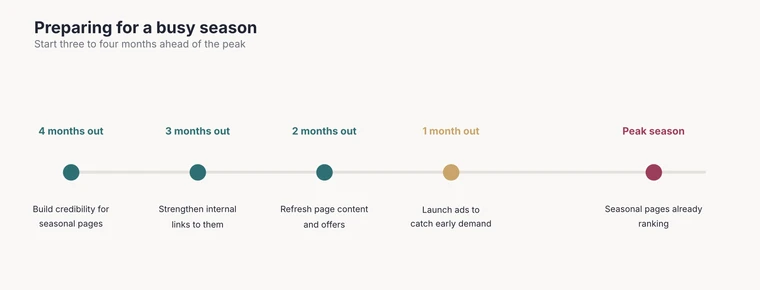
The instinct was right. The execution would have backfired. Concentrating everything on one page in a short burst looks unnatural to Google, and it can attract exactly the kind of scrutiny you don't want right before your busiest weeks. Ideally, seasonal pages get attention three to four months ahead, not weeks.
So we proposed a split: half to the seasonal page, half to the homepage. The seasonal page still got a strong push, and the site's overall reputation stayed natural. The owner agreed.
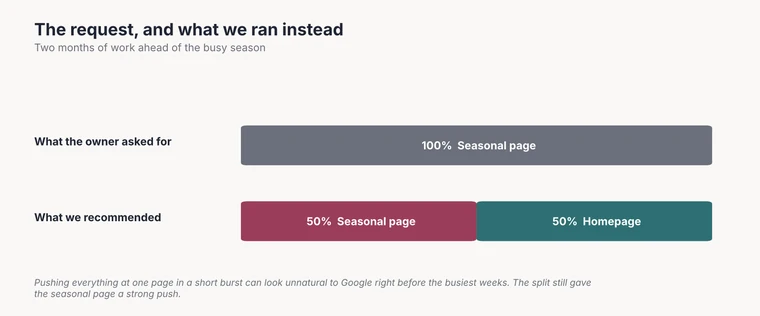
That's the difference between an agency that takes orders and one that protects your business.
Phase 3: Steady maintenance (May to August 2025)
After the season ended, the budget moved to a lower maintenance level. The quality of the work stayed the same, just at a slower pace. For businesses with a seasonal rhythm, this push-then-maintain cycle is normal and efficient.
Phase 4: Growing with the business (September 2025 to April 2026)
By late 2025, the business had expanded from a regional operation to a nationwide one. The owner had built a new set of pages to support that growth, and asked us to shift our focus to them.
Budget returned to its earlier level, and we directed credibility toward those new pages, letting it flow through the site to the pages beneath them.
Why local SEO still matters for a growing med spa
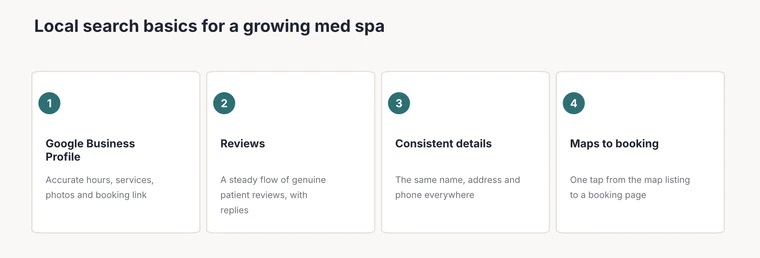
Even as this med spa expanded nationally, local search remained an important foundation. A strong local SEO strategy helps a medical spa appear when nearby patients search for treatments, consults, or a trusted provider.
For medical spas, that usually means keeping the Google Business Profile accurate, earning positive reviews, maintaining consistent location details, and making it easy for patients to move from Google Maps to a booking page. These signals support patient acquisition without replacing the broader authority work described in this case study.
How keyword research and internal linking strengthened the site
The credibility campaign worked best because the website itself was organized around what patients and shoppers actually search for. Thoughtful keyword research helped identify treatment, product, and seasonal pages worth strengthening, while long tail keywords captured more specific searches with clearer buying intent.
Technical SEO and procedure page content then connected those pages in a logical way: from the homepage to treatment categories, from treatment pages to related services, and from educational content to the online store. That structure helped Google understand which pages mattered most and made the user experience smoother for visitors.
Reputation management: cleaning up what patients see first
A med spa’s online reputation is not only about review scores. It also includes what appears when someone searches the practice’s name, the providers’ names, or its products.
In this campaign, reputation management meant distinguishing genuine, credible mentions from low-value scraper sites. Building references through press coverage and strengthening review management gave Google, and potential patients, a clearer picture of the brand. That same principle supports visibility in AI search, where tools tend to favor businesses that reputable sources reference and trust.
Med spa marketing beyond SEO: social media and Google Ads
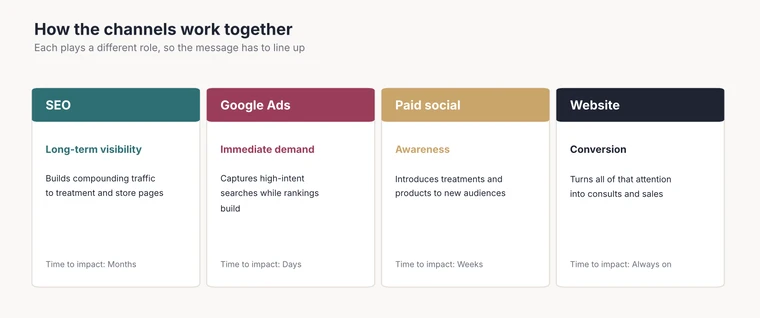
SEO was the core growth channel, but it works best as part of a comprehensive marketing strategy. Paid social can introduce treatments and products to your audience, while PPC and Google Ads can capture high-intent searches while organic rankings continue to build.
The key is alignment. Paid campaigns, social content, and website design should reinforce the same services, seasonal offers, and brand message as the website. A clear, conversion-focused website design helps turn that visibility into consultations and product sales.
The Results
| May 2024 | Apr 2026 | |
|---|---|---|
| Monthly search traffic | 37,500 | 145,000 |
| Top 3 Google rankings | 577 | 2,900 |
| Site authority score* | 19 | 34 |
| Credible websites referencing the brand | ~9 quality publications | Over 10x more |
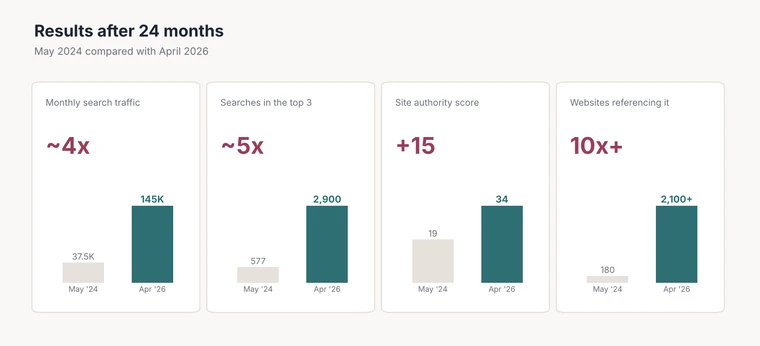
*Domain Rating, a widely used measure of how much trust a website has built.
Monthly search traffic nearly quadrupled. Top 3 rankings, the positions where nearly all buying clicks happen, grew about 5x.
The biggest jump came in late 2025, when nearly two years of steady work began compounding on itself. And most of that traffic landed on pages built to sell, not on blog posts.
The relationship speaks for itself, too. The med spa has worked with us continuously since May 2024, and brought us in on a second website for about ten months along the way.
What this means for your practice
- Consistency compounds. Twenty-four months without a pause is why the growth accelerated in year two. Every month built on the last.
- Your marketing should follow your business calendar. If you have busy seasons, whether it's holiday product sales, summer body treatments, or pre-wedding season, the groundwork needs to start months ahead.
- A good agency will sometimes tell you no. The most valuable call we made in this campaign was talking the owner out of a shortcut that could have hurt them at the worst possible time.
- Your strategy should grow with you. When this business expanded, its marketing shifted to match within weeks.
- AI search rewards the same credibility. When people ask ChatGPT or Google's AI tools where to buy cosmetic products or which med spa to visit, those tools favor businesses that reputable sources reference and trust.
Watch every season unfold
Every Sculpted Search client gets our client dashboard, which shows your rankings, website traffic, and how often AI tools like ChatGPT mention your business, all in one place. You can watch your seasonal pages climb ahead of your busy months instead of hoping they're ready.
It also includes a built-in reputation management tracker, something no other marketing agency in our field offers, so you always know what people see when they search your name.
If your med spa is already growing and you're ready to compete with the big brands, the next level is built one steady month at a time. Explore Sculpted Search’s dedicated Med Spa SEO services.
Frequently Asked Questions (FAQ)
What is med spa search engine optimization?
Med spa search engine optimization (SEO) is the process of improving a med spa’s visibility in Google and other search engines. It includes optimizing treatment and location pages, building credible references, improving the website’s structure, and strengthening the practice’s online reputation.
How long does med spa SEO take to work?
Meaningful progress often begins within a few months, but durable growth usually takes longer. In this case study, steady work over 24 months helped monthly search traffic grow from 37,500 to 145,000 and top 3 rankings increase from 577 to 2,900.
Why is local SEO important for medical spas?
Local SEO helps medical spas appear in local search results and Google Maps when nearby patients look for treatments or providers. An accurate Google Business Profile, consistent business information, and positive reviews all support local visibility and patient acquisition. Sculpted Search offers dedicated local SEO services for this purpose.
Do med spas need content marketing if they already run Google Ads?
Yes. Google Ads can capture immediate demand, while SEO and content marketing build long-term organic visibility. Using both can create a more balanced med spa marketing strategy, especially during seasonal treatment and product campaigns. Sculpted Search provides both PPC and Google Ads management and organic SEO support.
How does reputation management affect SEO?
Reputation management influences how both patients and search engines perceive a med spa. Credible mentions from trustworthy publications, authentic reviews, and a clean search results page can strengthen trust, while scraper sites and low-quality references add little value. Review management and press coverage are both part of that process.
Can SEO help an online cosmetics store compete with large brands?
Yes, but it requires a focused strategy. Instead of trying to outrank every major retailer immediately, a med spa can build authority around its unique treatments, expert providers, product categories, and seasonal offers, then use internal linking to pass strength to its store pages.
What should a med spa do before its busy season?
Start at least three to four months ahead. Build credibility for the relevant treatment or product pages, strengthen internal links, update the page content, and avoid concentrating all promotional effort on one page in a short burst.
About the author
This case study was written by the Sculpted Search team. Sculpted Search is a digital marketing agency built for aesthetic plastic surgeons, reconstructive surgeons, med spas, and medical suppliers, covering SEO, content, press, ads, websites, and AI search visibility. The agency is led by CEO Artemis Peacocke, who reviews every audit herself, and its team includes an SEO lead, a content lead, an outreach lead, and an outreach specialist. The team works white-hat only, gets surgeon sign-off on anything clinical, and reports in plain English each month. Ask for a marketing audit to see where your practice stands.